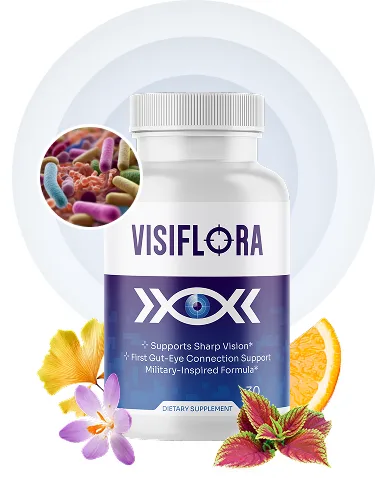
VisiFlora Review 2027
A broad vision-support formula built around the eye ingredients with the strongest research behind them — lutein, zeaxanthin, astaxanthin, zinc, and bilberry — plus a long supporting cast. Strong lineup, honest pricing, one capsule a day — but doses are undisclosed and the marketing runs ahead of the evidence.
Our Verdict: 4.2/5 — A strong eye formula with a transparency gap. VisiFlora earns points for a genuinely well-chosen core lineup (lutein, zeaxanthin, astaxanthin, zinc, bilberry, saffron), transparent package pricing, a real 60-day guarantee, and a simple once-daily capsule. It loses points for undisclosed per-ingredient doses (only zinc at 11mg is stated), a 22-in-1 claim that the page's own ingredient section does not fully support (21 ingredients named), and marketing built around a speculative gut-eye theory with claims like "6,000x stronger than Vitamin C" that sound more impressive than they are. If you want a broad, once-daily eye formula and you understand the evidence is ingredient-level, it is a reasonable buy. If you have diagnosed macular degeneration, follow your eye doctor's guidance — that usually means a tested AREDS2 formula, not a general supplement.
On this page
What Is VisiFlora?How Does It Work?Ingredients Deep DivePros & ConsWho Should / Should Not Take ItHow to Use for Best ResultsVisiFlora vs AlternativesSide Effects & SafetyPricingFAQWhat Is VisiFlora?
VisiFlora is a vision-support dietary supplement sold as a once-daily capsule. The vendor markets it as a "22-in-1 vision-essential formula" built around a theory it calls the gut-eye connection: the idea that toxins from the gut — specifically lipopolysaccharides (LPS), fragments of bacterial cell walls — can reach the eyes and contribute to inflammation and damage, and that a formula combining eye nutrients with gut-targeted ingredients can protect vision "from within."
That framing needs an honest qualifier up front. The gut-eye axis is a real area of research: scientists do study how gut inflammation and the microbiome relate to eye conditions. But the specific chain the vendor describes — LPS toxins silently attacking your retina, a supplement "sweeping" them away — is a marketing simplification of early-stage science, not an established mechanism. No supplement has been shown to neutralize LPS in the retina. What VisiFlora actually is, underneath the framing, is a broad eye-health formula: a solid core of well-studied eye nutrients (lutein, zeaxanthin, astaxanthin, zinc, vitamin A, bilberry, saffron) plus antioxidants and herbal extracts. That core is the reason this product earns 4.2/5. The gut-eye story is the reason it does not earn higher.
Two transparency notes matter before you read further. First, the vendor describes VisiFlora as a 22-in-1 formula, but the ingredient section on the vendor page we reviewed names 21 ingredients. We could not verify a 22nd ingredient from the page text, so this review lists the 21 named ingredients and flags the discrepancy rather than repeating the 22-in-1 claim as fact. Second, per-ingredient doses are not disclosed — the only dose stated anywhere on the page is zinc at 11mg. That is the single biggest weakness of this product, because without doses we cannot verify that any ingredient is present at the amount used in published research.
What VisiFlora gets right on the commercial side: pricing is fully transparent (three packages, no subscription, no free-trial trap), every order carries a 60-day money-back guarantee, the product is sold only through the vendor's own page, and the formula is non-GMO, stimulant-free, and 100% vegan. The capsules are made in a facility the vendor says follows the USDA National Organic Program. Those are genuine positives, and they are why this review treats VisiFlora as a legitimate product with real strengths — not a scam — while still holding its marketing to account.
How Does VisiFlora Work?
VisiFlora's formula works — to the extent it works — through three overlapping mechanisms: macular pigment protection, antioxidant defense, and blood-flow support. The vendor adds a fourth, the gut-eye theory. We cover all four, with the evidence level of each stated plainly.
1. Macular pigment: lutein and zeaxanthin
Lutein and zeaxanthin are carotenoid pigments that accumulate in the macula, the central part of the retina responsible for sharp, detailed vision. There they act as "internal sunglasses," filtering high-energy blue light and UV before it damages retinal tissue. This is the best-supported mechanism in the entire formula: the large NIH AREDS2 trial found that lutein + zeaxanthin (10mg + 2mg daily) reduced progression to advanced age-related macular degeneration in people at high risk. Macular pigment builds slowly — weeks to months of daily intake — which is why eye formulas are long-horizon products. The catch for VisiFlora specifically: the vendor does not disclose the lutein or zeaxanthin dose, so we cannot confirm the formula matches the AREDS2 amounts.
2. Antioxidant defense: astaxanthin, vitamins C and E, zinc, selenium, lycopene
The retina is one of the most metabolically active tissues in the body, and it is constantly exposed to light — a combination that generates a heavy load of oxidative stress. Antioxidants neutralize the free radicals that damage retinal cells over time. Astaxanthin is a potent carotenoid antioxidant with evidence for reducing eye fatigue and supporting retinal health. Vitamins C and E and selenium are classic antioxidant nutrients. Zinc is essential for the retina (it helps transport vitamin A and supports night vision) and was a core component of the AREDS2 formula. Lycopene adds further antioxidant coverage. This is a sensible, if conventional, antioxidant stack — the same logic behind every major eye formula.
3. Blood flow and nerve support: ginkgo, coleus forskohlii, taurine, alpha lipoic acid
The retina depends on rich blood flow to deliver oxygen and nutrients. Ginkgo biloba is studied for improving microcirculation, including to the eye, and the vendor claims it helps improve retinal blood flow by 23% — a figure we could not verify from a cited study, and you should treat it as marketing, not a measured result. Coleus forskohlii is included for the same circulation rationale. Taurine is the most abundant amino acid in the retina and supports retinal cell function and hydration. Alpha lipoic acid is a versatile antioxidant that regenerates other antioxidants (vitamins C and E), extending their protective effect. These are plausible supporting ingredients, but the evidence for each in eye health specifically is thinner than for the macular-pigment core.
4. The gut-eye theory: the vendor's framing, honestly assessed
The vendor's central story is that LPS toxins from the gut damage the eyes, and that ingredients like grape seed extract, rutin, quercetin, and taurine reinforce the "blood-retinal barrier" and reduce LPS. There is genuine early research linking gut dysbiosis and inflammation to eye conditions, including age-related macular degeneration and uveitis. But the chain from "gut produces LPS" to "this capsule sweeps LPS from your retina" is not established science — it is a plausible-sounding story built from fragments of real research. The gut-targeted ingredients in VisiFlora (grape seed, rutin, quercetin) are legitimate antioxidants with their own evidence, so they are not wasted — but buy this product for its eye nutrients, not for the gut-eye theory. If gut health is your actual concern, diet, fiber, and fermented foods have far more evidence behind them than any capsule.
The honest summary of mechanism: VisiFlora's core eye nutrients work through well-understood pathways (macular pigment, antioxidant defense). Its supporting ingredients are plausible. Its headline theory is speculative. And because doses are undisclosed, the entire mechanism discussion is about what the ingredients can do at research doses — not what this specific capsule has been shown to do.
What's Inside VisiFlora? Ingredient Deep Dive
The vendor's ingredient section names 21 ingredients (marketed as 22-in-1). Per-ingredient doses are not disclosed — the only dose stated is zinc at 11mg. Without doses, we cannot verify that any ingredient is present at the amount used in published research. Each entry below states what the ingredient is, what the research says, and the dose situation.
Vision Defense Matrix
1. Astaxanthin
What it is. A red carotenoid pigment produced by microalgae, one of the most potent natural antioxidants known. It crosses the blood-retinal barrier, which is why it is a staple of eye formulas.
What published research says. Randomized trials link astaxanthin (typically 4–12mg/day) to reduced eye fatigue, better focusing ability, and improved retinal blood flow. The vendor's claim that it is "6,000x stronger than Vitamin C" refers to a singlet-oxygen quenching comparison in lab conditions — a real but narrow metric that does not mean it is 6,000 times more useful in the body. Treat the number as marketing color, not a clinical fact.
Dose in product vs. studied dose. Not disclosed. Studies typically use 4–12mg/day.
2. Vitamin C & 3. Vitamin E
What they are. The two classic antioxidant vitamins. Vitamin C protects the aqueous parts of the eye (including the lens); vitamin E protects cell membranes. They work as a pair — vitamin C regenerates vitamin E after it neutralizes a free radical.
What published research says. Both were components of the AREDS/AREDS2 formulas, which reduced progression to advanced macular degeneration in high-risk participants. Their role in eye health is well established at the population level, though the benefit is mainly for people at risk of AMD rather than the general population.
Dose in product vs. studied dose. Not disclosed. AREDS2 used 500mg vitamin C and 400 IU vitamin E daily — high doses that a single capsule is unlikely to match.
4. Copper & 5. Selenium
What they are. Trace minerals with antioxidant roles. Copper is included in AREDS2 formulas specifically to prevent the copper deficiency that high-dose zinc can cause. Selenium supports antioxidant enzymes (glutathione peroxidase) that protect eye tissue.
What published research says. Copper's eye role is mainly as a zinc balancer — important, but not a standalone eye therapy. Selenium's evidence for eye health is supportive rather than direct.
Dose in product vs. studied dose. Not disclosed.
6. Chromium
What it is. A trace mineral involved in insulin signaling and blood-sugar control. The vendor includes it to "support stable blood sugar, reducing LPS activity."
What published research says. Chromium's effect on blood sugar is modest and debated. Its connection to eye health is indirect at best — stable blood sugar matters for the eyes over the long term (diabetic eye disease is driven by chronic high blood sugar), but chromium is not an eye ingredient in any direct sense.
Dose in product vs. studied dose. Not disclosed.
Gut-Eye Barrier Complex
7. Grape Seed Extract, 8. Rutin & 9. Quercetin
What they are. Plant flavonoids with antioxidant and blood-vessel-supporting properties. The vendor calls them the "Gut Armor Trio," claiming they reinforce the blood-retinal barrier. Grape seed extract is rich in proanthocyanidins; rutin and quercetin are bioflavonoids found in many fruits and vegetables.
What published research says. All three have real antioxidant and anti-inflammatory evidence. Grape seed extract has modest evidence for circulation and eye strain. Quercetin is one of the most studied flavonoids for inflammation. But the specific claim that they form a barrier against gut toxins reaching the eye is the vendor's framing, not an established finding. Treat them as solid general antioxidants with a speculative eye-specific story attached.
Dose in product vs. studied dose. Not disclosed. Grape seed studies typically use 100–300mg/day; quercetin studies use 500–1,000mg/day.
10. Taurine
What it is. An amino acid that is the most abundant free amino acid in the retina. It supports retinal cell function, hydration, and protection against light-induced damage.
What published research says. Taurine deficiency is linked to retinal degeneration in animal studies, and taurine supplementation is a standard part of many eye formulas. Human evidence is supportive but not conclusive for supplementation in people who are not deficient.
Dose in product vs. studied dose. Not disclosed. Studies typically use 500–2,000mg/day.
11. Alpha Lipoic Acid (ALA)
What it is. A versatile antioxidant that works in both water and fat environments and regenerates other antioxidants (vitamins C and E, glutathione).
What published research says. ALA has evidence for diabetic nerve support and general antioxidant protection. Its eye-specific evidence is preliminary. It can lower blood sugar, which matters for people on diabetes medication.
Dose in product vs. studied dose. Not disclosed. Studies typically use 300–600mg/day.
Vision Performance Boosters
12. Ginkgo Biloba
What it is. One of the most studied herbal extracts, used for circulation and cognitive support. The vendor claims it helps improve blood flow to the retina.
What published research says. Ginkgo has modest evidence for improving microcirculation. Some small studies suggest benefits for glaucoma and retinal blood flow, but the evidence is not strong. The vendor's specific "23% improvement" figure is unverified — no cited study was provided on the page we reviewed.
Safety note. Ginkgo increases bleeding risk and interacts with blood thinners (warfarin, aspirin therapy), NSAIDs, and some antidepressants. This is the ingredient that most requires a doctor conversation before use.
Dose in product vs. studied dose. Not disclosed. Standardized ginkgo studies typically use 120–240mg/day.
13. Coleus Forskohlii
What it is. An herb whose active compound, forskolin, increases cyclic AMP in cells. It has been studied for eye pressure (glaucoma) and fat metabolism.
What published research says. Forskolin eye drops have been studied for lowering intraocular pressure. Oral coleus evidence for eye health is thin. It can lower blood pressure, which matters for people on blood-pressure medication.
Dose in product vs. studied dose. Not disclosed.
14. Eyebright
What it is. A traditional European herb (Euphrasia) used for centuries for eye irritation, redness, and strain — the name is the traditional use.
What published research says. Traditional use is long, but modern clinical evidence is limited to small studies, mostly of topical eyebright preparations. Oral eyebright evidence for vision is thin. It is a plausible traditional addition, not a research-backed one.
Dose in product vs. studied dose. Not disclosed.
Macular & Lens Protection Blend
15. Vitamin A (Beta Carotene)
What it is. Vitamin A is essential for vision — it forms rhodopsin, the pigment that lets you see in low light. Beta carotene is the plant precursor the body converts to vitamin A.
What published research says. Vitamin A deficiency is a leading cause of preventable night blindness worldwide. In people who are not deficient, extra vitamin A does not improve vision, and high-dose preformed vitamin A (retinol) can be harmful over time — which is why AREDS2 replaced beta carotene with lutein/zeaxanthin (beta carotene also increased lung-cancer risk in smokers). Beta carotene is the safer form for most people.
Dose in product vs. studied dose. Not disclosed.
16. Lutein & 17. Zeaxanthin (from Marigold)
What they are. The two macular pigments — the "internal sunglasses" that filter blue light and protect the macula. Marigold extract is the standard commercial source.
What published research says. The strongest evidence in the entire formula. AREDS2 (a large NIH trial) found lutein 10mg + zeaxanthin 2mg daily reduced progression to advanced AMD in high-risk participants. Lutein and zeaxanthin are the only ingredients here with large-trial, product-relevant evidence behind them.
Dose in product vs. studied dose. Not disclosed. This is the most important missing number on the label — AREDS2 used 10mg lutein + 2mg zeaxanthin, and we cannot confirm VisiFlora matches it.
18. Zinc (11mg)
What it is. An essential mineral for the retina — it helps transport vitamin A from the liver to the retina and supports night vision.
What published research says. Zinc was a core AREDS2 component (80mg zinc oxide in the trial). Zinc deficiency impairs night vision. At 11mg, VisiFlora's dose is a sensible daily amount (close to the daily value) that avoids the nausea and copper-depletion risks of high-dose zinc — but it is far below the AREDS2 trial dose, so it should not be read as an AMD-treatment dose.
Dose in product vs. studied dose. Disclosed: 11mg. Reasonable for general eye support; well below the 80mg AREDS2 dose.
19. Bilberry Extract
What it is. A European berry rich in anthocyanins, famous from the WWII-pilot story the vendor repeats (pilots reportedly ate bilberry jam for night vision). The story is likely apocryphal, but bilberry itself is a legitimate eye ingredient.
What published research says. Small trials suggest bilberry may support night vision, reduce eye fatigue, and protect retinal cells. The evidence is modest — promising, not conclusive. Anthocyanins are genuine antioxidants with plausible retinal benefits.
Dose in product vs. studied dose. Not disclosed. Studies typically use 60–120mg of standardized extract/day.
20. Lycopene
What it is. A red carotenoid (the pigment in tomatoes) with antioxidant activity, studied for eye and prostate health.
What published research says. Lycopene has evidence for general antioxidant protection and some eye-specific studies, but it is a supporting player rather than a lead eye ingredient.
Dose in product vs. studied dose. Not disclosed.
21. Saffron Extract
What it is. The world's most expensive spice, rich in crocin and crocetin. Used traditionally for mood and vision.
What published research says. Small clinical trials (including research from Iran) suggest saffron (typically 20–30mg/day) may support visual acuity and retinal function in early AMD. The evidence is early-stage but genuinely promising — saffron is one of the more interesting ingredients in this formula.
Dose in product vs. studied dose. Not disclosed. Trials typically use 20–30mg/day.
What is NOT in VisiFlora
Worth noting: the formula contains no high-dose zinc (which would risk nausea and copper depletion), no beta carotene at smoker-risk doses, and no stimulants. For people who want a broad eye formula without aggressive megadosing, that restraint is a genuine plus. The flip side is that without disclosed doses, we cannot confirm any ingredient reaches its studied amount — and the two most important numbers (lutein, zeaxanthin) are missing.
Pros & Cons
✓ What We Like
- Core lineup is genuinely strong: lutein, zeaxanthin, astaxanthin, zinc, bilberry, saffron — all with real eye-health evidence
- Transparent package pricing — no subscription, no free-trial trap
- Real 60-day money-back guarantee on every order
- Simple once-daily capsule — no complicated schedule
- Non-GMO, stimulant-free, 100% vegan formula
- Zinc dose disclosed (11mg) — a sensible daily amount that avoids high-dose zinc risks
- Beta carotene form of vitamin A (safer than preformed retinol for most people)
- Sold only through the vendor's own site — no counterfeit-prone marketplace listings
– What Could Be Better
- Per-ingredient doses NOT disclosed (except zinc) — impossible to verify any ingredient is at a research dose
- Marketed as 22-in-1, but the page's own ingredient section names 21 ingredients
- Gut-eye / LPS marketing is speculative — not established science
- Vendor claims ("6,000x stronger", "23% blood-flow improvement") are unverified marketing figures
- No published clinical trial of the combined VisiFlora formula
- Ginkgo adds a real bleeding-risk interaction that many buyers will not expect in an eye vitamin
- Not a substitute for an AREDS2 formula for diagnosed macular degeneration
- Only sold through the vendor's own site — no retail or Amazon option
Who Should / Should Not Take It
VisiFlora may be a reasonable fit if you: are over 40 and noticing more eye fatigue, dryness, or trouble with night driving; spend long hours on screens and want broad antioxidant + macular-pigment support; want a single once-daily eye formula rather than juggling separate lutein, zinc, and bilberry pills; understand that the evidence is ingredient-level and the product has no clinical trial; and are comfortable with the price for a broad formula. If that describes you, the 3- or 6-bottle package with the 60-day guarantee is a reasonable buy.
Think twice or talk to your doctor first if you: have diagnosed age-related macular degeneration, glaucoma, diabetic retinopathy, or any diagnosed eye disease — these need an eye doctor's treatment plan, and for AMD that usually means a tested AREDS2 formula, not a general supplement; take blood thinners (ginkgo interacts); take diabetes or blood-pressure medication (ALA, chromium, and coleus can all affect blood sugar or blood pressure); are scheduled for surgery (ginkgo increases bleeding risk — surgeons typically ask you to stop it beforehand); are pregnant or nursing; or have any chronic medical condition. Do not give eye supplements to children. And if your main goal is fixing a specific vision problem — floaters, flashes, sudden vision loss, eye pain — see an eye doctor promptly. No supplement treats those, and delaying care for a retinal problem can cost vision.
If your main goal is general wellness rather than eye health specifically, compare NerveCalm or our Neuro Sharp review for nerve and brain support. If blood-sugar control is your primary concern — blood sugar and eye health are linked over the long term — read our GLPro review as well.
How to Use VisiFlora for Best Results
Follow the vendor label first. The serving size, timing, and daily count are set by the vendor — follow the directions on the label or the vendor page, not advice from a random review. General guidance below is educational only and does not replace the label.
- One capsule daily with food. Take it with a meal that contains some fat — lutein, zeaxanthin, astaxanthin, and vitamins A and E are fat-soluble, and absorption improves significantly when taken with dietary fat. A capsule with breakfast that includes eggs, nuts, or olive oil is a good default.
- Take it with food to protect your stomach. Zinc is a common cause of mild nausea on an empty stomach. With food, most people tolerate it without issue.
- Give it 8 to 12 weeks before judging. Macular pigment builds slowly. Lutein and zeaxanthin accumulate in the retina over weeks to months — anyone promising overnight results is selling marketing, not physiology. Set a calendar reminder at week 10 to assess honestly.
- Track the right things. Note eye fatigue at the end of a screen day, comfort driving at night, and dryness — not "did my prescription change." Supplements do not change refractive error (nearsightedness, farsightedness, astigmatism), and expecting them to will only disappoint you.
- Keep up the basics that matter more. The 20-20-20 rule for screens (every 20 minutes, look at something 20 feet away for 20 seconds), sunglasses outdoors, not smoking, and managing blood sugar and blood pressure all have more evidence behind them for long-term eye health than any supplement. VisiFlora is a complement to those habits, not a replacement.
- Check interactions before you start. If you take blood thinners, diabetes medication, or blood-pressure medication, or have surgery scheduled, talk to your doctor first — ginkgo, ALA, chromium, and coleus all have interaction potential.
- Use the guarantee window honestly. The 60-day guarantee gives you a real trial period. Set a reminder to assess at day 45: if you have taken it daily with food and feel no benefit, use the refund rather than letting the window lapse.
- Buy direct only. The vendor sells only through its own page. Third-party listings are where counterfeits and expired stock show up.
VisiFlora vs Alternatives
VisiFlora sits in a crowded category, so it helps to compare it against the realistic alternatives a buyer would actually consider: a tested AREDS2 formula, a simple standalone lutein + zeaxanthin pill, and diet alone.
| Product | Formula | Format | Price (observed) | Best For |
|---|---|---|---|---|
| VisiFlora — 4.2/5 | 21 named ingredients: lutein, zeaxanthin, astaxanthin, zinc (11mg), bilberry, saffron + antioxidants & herbs | 1 capsule/day | $79 / 2-bottle; $59 each / 3-bottle; $49 each / 6-bottle; 60-day guarantee | People who want one broad, once-daily eye formula |
| AREDS2 formula (category) | Lutein 10mg, zeaxanthin 2mg, zinc 80mg, copper 2mg, vitamins C 500mg + E 400 IU — exact tested doses | 2 softgels/day | Varies by brand — check the product page | People with diagnosed intermediate AMD following an eye doctor's plan |
| Standalone lutein + zeaxanthin (category) | Lutein + zeaxanthin only, usually at AREDS2-level doses | 1 capsule/day | Varies by brand — check the product page | People who want the core macular pigments at known doses, nothing else |
| Diet only (leafy greens, eggs, fish) | Food-based lutein, zeaxanthin, zinc, omega-3s | Meals | Grocery cost | Everyone — the foundation no supplement replaces |
VisiFlora vs an AREDS2 formula: these are different tools. An AREDS2 formula has exact, trial-tested doses for one specific job — slowing progression of intermediate AMD — and it is what eye doctors prescribe for that job. VisiFlora is broader and more convenient (one capsule, more ingredients), but it does not disclose doses and has no trial. If you have diagnosed AMD, the AREDS2 formula is the right pick, full stop. If you want general eye support without a diagnosis, VisiFlora's breadth is a reasonable alternative — just know you are trading dose certainty for convenience and variety.
VisiFlora vs standalone lutein + zeaxanthin: a standalone lutein + zeaxanthin pill gives you the two most important eye ingredients at known AREDS2-level doses, usually for less money. What it lacks is everything else in VisiFlora — astaxanthin, bilberry, saffron, zinc, and the antioxidant stack. If you want the core pigments at verified doses and nothing else, the standalone pill wins on transparency and price. If you want one capsule that covers the whole eye-nutrient spectrum, VisiFlora wins on breadth — at the cost of dose transparency.
VisiFlora vs diet alone: a diet rich in leafy greens (spinach, kale), eggs, fatty fish, and colorful vegetables delivers lutein, zeaxanthin, zinc, and omega-3s in food form — and food is the foundation no supplement replaces. A supplement makes sense as a top-up for people who do not eat that way consistently, or who want higher intakes than diet alone provides. If your diet is already excellent, a supplement adds less. For a broader checklist on evaluating any supplement, see our guide on what to look for in a supplement.
Side Effects & Safety
Ginkgo (bleeding risk) — the main safety topic. Ginkgo biloba increases bleeding risk and interacts with blood thinners (warfarin, aspirin therapy, clopidogrel), NSAIDs (ibuprofen, naproxen), and some antidepressants. If you take any of these, talk to your doctor before using VisiFlora. Surgeons typically ask patients to stop ginkgo before surgery — if you have surgery scheduled, tell your surgeon you are taking a ginkgo-containing supplement.
Zinc (stomach upset). Zinc is a common cause of mild nausea, especially on an empty stomach. At 11mg, VisiFlora's dose is modest and should be well tolerated with food. The risk of copper depletion seen with high-dose zinc (80mg in AREDS2) does not apply at this dose.
Vitamin A. The formula uses beta carotene, the plant precursor — the safer form, since the body converts only what it needs. Preformed vitamin A (retinol) in high doses can be harmful over time; beta carotene does not carry the same risk for most people. Smokers should note that high-dose beta carotene was linked to increased lung-cancer risk in two large trials — though those used much higher doses than a single capsule would contain.
Alpha lipoic acid, chromium, and coleus (blood sugar / blood pressure). ALA can lower blood sugar. Chromium may affect insulin sensitivity. Coleus forskohlii can lower blood pressure. People on diabetes or blood-pressure medication should check with their doctor, since the combination could push blood sugar or blood pressure lower than intended.
Herbal extracts (allergies). People with allergies to ragweed-family plants (marigold is the source of lutein/zeaxanthin here), or to any listed herb, should check the full ingredient list before use. Stop and seek medical advice if you experience an allergic reaction.
Pregnancy and nursing. Do not use this product while pregnant or nursing without explicit medical approval — several ingredients (ginkgo, coleus, high-dose herbal extracts) are not established as safe in pregnancy.
Eye symptoms that need a doctor, not a supplement. Sudden vision loss, flashes of light, a sudden increase in floaters, a curtain or shadow over part of your vision, eye pain, or a sudden change in vision are emergencies or urgent problems. See an eye doctor immediately. No supplement treats retinal detachment, acute glaucoma, or eye infection, and delaying care for those can cost vision.
Buying safely. VisiFlora is sold through the vendor's own website. Third-party listings — marketplace resellers, auction sites, social-media sellers — are where counterfeits and expired stock show up. Buying direct is the only way to guarantee the genuine product, the stated pricing, and the 60-day guarantee. For a broader checklist on vetting any supplement seller, see our supplement safety guide.
This page is not medical advice. Review the full ingredient list on the vendor's site and talk to your doctor before starting any supplement, especially if you are pregnant, nursing, taking medication, or managing a medical condition.
VisiFlora Pricing
| Package | Price (observed) | Shipping | Best For |
|---|---|---|---|
| 2 bottles | $158 ($79 / bottle) | + Small shipping fee | Trying it out |
| 3 bottles | $177 ($59 / bottle) | Free US shipping | A 3-month run |
| 6 bottles (best value) | $294 ($49 / bottle) | Free US shipping | Best value |
All packages include 3 free ebooks (Military Vision Protection Manual, Gut-Eye Healing Protocol, 48-Hour Vision Jump-Start). Prices and bonuses change, so check the vendor page for current pricing. Every order is backed by a 60-day money-back guarantee. This is a one-time purchase — no subscription, no recurring charges.
Our Final Verdict
4.2/5 — Strong eye formula, transparency gap. VisiFlora's core lineup is genuinely well chosen — lutein, zeaxanthin, astaxanthin, zinc, bilberry, and saffron are the ingredients an eye formula should have, and the pricing and guarantee are honest. But undisclosed doses, the 22-vs-21 ingredient mismatch, and speculative gut-eye marketing hold it back from a higher score. Buy it for broad, once-daily eye support with realistic expectations. If you have diagnosed macular degeneration, get an AREDS2 formula on your eye doctor's advice instead.
VisiFlora FAQ
Does VisiFlora work?
VisiFlora contains several ingredients with real research behind them for eye health — lutein and zeaxanthin (macular pigment), astaxanthin (antioxidant), zinc (night vision), and bilberry (retinal support). Those ingredients have evidence at specific doses in published studies. But VisiFlora itself has not been tested in a published clinical trial, and the vendor does not disclose per-ingredient doses, so we cannot confirm any ingredient is present at its studied dose. The honest summary: the formula is built from plausible, research-backed ingredients, but the product-level evidence is indirect.
Is VisiFlora legit or a scam?
VisiFlora is a real product sold through its own website with a named ingredient list, transparent package pricing, and a 60-day money-back guarantee. It is not a free-trial trap. That said, its marketing leans on a speculative gut-eye theory and very strong claims that go beyond what the ingredients can be shown to deliver. Buy only from the vendor's page — third-party listings are where counterfeits show up.
What are the side effects of VisiFlora?
Most people tolerate eye-health formulas well. Possible issues: mild stomach upset (zinc is a common cause — taking it with food helps), ginkgo may increase bleeding risk and interact with blood thinners, vitamin A in high doses can be harmful over time, and some people are sensitive to herbal extracts. People on blood thinners, diabetes medication, or blood-pressure medication should talk to their doctor first. This page is not medical advice.
How many ingredients does VisiFlora have — 21 or 22?
The vendor markets VisiFlora as a 22-in-1 formula. The ingredient section on the vendor page we reviewed names 21 ingredients. We could not verify a 22nd ingredient from the page text. We list the 21 named ingredients in this review and note the discrepancy rather than repeating the 22-in-1 claim as fact.
How much does VisiFlora cost?
Pricing observed on the vendor page: 2 bottles $158 ($79 per bottle) plus a small shipping fee; 3 bottles $177 ($59 per bottle) with free US shipping; 6 bottles $294 ($49 per bottle) with free US shipping. All packages include 3 free ebooks. Every order is backed by a 60-day money-back guarantee. Prices change, so check the vendor page for current pricing.
Where can I buy VisiFlora?
VisiFlora is sold through its own website — it is not available in stores or on Amazon. Buying direct is the only way to guarantee you receive the genuine product, the current pricing, and the 60-day money-back guarantee.
How do you take VisiFlora?
Per the vendor: one capsule daily with food. Follow the directions on the vendor page and the product packaging. Eye-health supplements are slow, cumulative products — expect weeks to months of consistent use before judging, not overnight change.
How long does VisiFlora take to work?
There is no guaranteed timeline. The vendor says many users report improvements in eye comfort, clarity, and night vision within a few weeks. That is a marketing statement, not a measured result. Realistically, lutein and zeaxanthin build up in the macula over weeks to months, and any honest assessment needs at least 8 to 12 weeks of daily use.
Is VisiFlora better than a standard AREDS2 eye vitamin?
Different tools for different jobs. AREDS2 formulas were tested in large NIH trials for age-related macular degeneration and use specific high doses of lutein, zeaxanthin, zinc, copper, and vitamins C and E. VisiFlora is broader — it adds astaxanthin, bilberry, saffron, ginkgo, and gut-targeted ingredients — but it does not disclose doses, so it cannot be compared dose-for-dose with AREDS2. People with diagnosed macular degeneration should follow their eye doctor's guidance, which will usually mean an AREDS2 formula, not a general supplement.
Who should not take VisiFlora?
Do not start VisiFlora without talking to your doctor if you are pregnant or nursing, take blood thinners (warfarin, aspirin therapy, or similar), take diabetes or blood-pressure medication, are scheduled for surgery, have a bleeding disorder, or have any chronic medical condition. Do not give eye supplements to children. This page is not medical advice.
You May Also Like
Neuro Sharp
Focus, memory & mental clarity with Ginkgo, Bacopa & Huperzine-A. 90-day guarantee.
NerveCalm
Nerve health capsules with 4 disclosed blends & a 90-day guarantee. Clear dosing, honest formula.