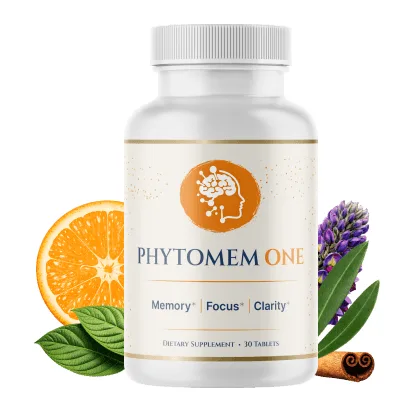
Phytomem One Review 2027
A 10-ingredient brain formula built around berberine, saffron, fucoxanthin, and morosil — a genuinely interesting lineup with real research behind several ingredients. But the marketing leans on speculative theories, doses are undisclosed, and berberine brings a drug-interaction profile you need to know about.
Our Verdict: 4.1/5 — Interesting formula, speculative framing, real interaction homework. Phytomem One earns points for a genuinely interesting ingredient lineup (berberine, saffron, fucoxanthin, fucoidan, morosil), transparent package pricing, a real 60-day guarantee, and a simple once-daily tablet. It loses points for undisclosed per-ingredient doses, marketing built around two speculative theories (microplastics "strangling" the brain, "Type 3 Diabetes"), and berberine's drug-interaction profile, which the vendor's page does not adequately warn about. If you want a broad brain formula with a metabolic angle and you have cleared berberine with your doctor, it is a reasonable buy. If you take prescription medication — especially diabetes medication — talk to your doctor first, or skip it.
On this page
What Is Phytomem One?How Does It Work?Ingredients Deep DivePros & ConsWho Should / Should Not Take ItHow to Use for Best ResultsPhytomem One vs AlternativesSide Effects & SafetyPricingFAQWhat Is Phytomem One?
Phytomem One is a brain-support dietary supplement sold as a once-daily tablet (30 tablets per bottle). The vendor markets it as a "10-in-1 neuro-essential formula" built around a "Dual-Defense System" that targets two supposed root causes of memory loss: what it calls the "Plastic Stranglehold" (microplastics damaging the brain) and "Type 3 Diabetes" (insulin resistance in the brain).
Both framings need honest qualifiers up front, because they are the two load-bearing claims of the entire sales page. "Type 3 Diabetes" is a research nickname some scientists use for the idea that Alzheimer's disease involves insulin resistance in the brain — brain cells becoming less able to use glucose. It is not an established medical diagnosis. No doctor will diagnose you with Type 3 Diabetes, and no test measures it. The underlying science (brain insulin resistance in Alzheimer's) is real, active research — but the label is marketing, and the vendor uses it to make its brain-fuel ingredients sound like they treat a specific disease. They do not. The "Plastic Stranglehold" is the vendor's own term for the idea that microplastics accumulate in the brain and damage neurons. Microplastics in human tissue, including brain tissue, is a real and growing area of research. But the claim that a supplement can "neutralize" microplastic damage or "clear toxic protein buildups" is far beyond what any published study has shown for these ingredients. Treat both framings as stories built from fragments of real science — not as established mechanisms.
What Phytomem One actually is, underneath the framing, is a 10-ingredient brain formula with a metabolic tilt: berberine, Ceylon cinnamon, corosolic acid, and kudzu flower (all aimed at glucose/insulin handling) plus saffron, fucoxanthin, fucoidan, oleuropein, morosil, and xylitol. Several of these ingredients — berberine and saffron especially — have genuinely interesting published research behind them. That is the reason this product earns 4.1/5. The speculative framing and the missing doses are the reason it does not earn higher.
Two transparency notes matter. First, per-ingredient doses are not disclosed anywhere on the vendor page — not one dose for any of the 10 ingredients. That is the single biggest weakness of this product, because without doses we cannot verify that any ingredient is present at the amount used in published research. Second, the vendor's page cites specific studies (Tehran University saffron research, Neural Regeneration Research on fucoxanthin, "up to 40%" and "up to 20%" figures) without providing references we could verify. We report those claims as vendor-cited, not as verified findings.
What Phytomem One gets right on the commercial side: pricing is fully transparent (three packages, no subscription, no free-trial trap), every order carries a 60-day money-back guarantee, the product is sold only through the vendor's own page, and the formula is non-GMO, stimulant-free, and described as 100% natural. Those are genuine positives, and they are why this review treats Phytomem One as a legitimate product with real strengths — not a scam — while still holding its marketing to account.
How Does Phytomem One Work?
Phytomem One's formula works — to the extent it works — through three overlapping mechanisms: metabolic/brain-fuel support, anti-inflammatory and antioxidant defense, and neural repair support. The vendor adds a fourth, the microplastic story. We cover all four, with the evidence level of each stated plainly.
1. Brain-fuel support: berberine, cinnamon, corosolic acid, kudzu
This is the most distinctive part of the formula, and the part with the most plausible mechanism. The brain runs almost entirely on glucose, and insulin signaling helps brain cells absorb it. In Alzheimer's disease, researchers have observed that brain cells become less responsive to insulin — the "Type 3 Diabetes" idea. Berberine activates AMPK, an enzyme often called the "metabolic master switch," which improves glucose uptake and insulin sensitivity. Ceylon cinnamon and corosolic acid (from banaba leaf) are both studied for improving insulin receptor sensitivity and glucose transport. Kudzu flower isoflavones have been studied for glucose uptake in brain tissue specifically. If brain cells are under-fueled because of insulin resistance, ingredients that improve glucose handling are a reasonable intervention in theory. The catch: the human evidence is mainly for blood-sugar control in the body, not for memory outcomes in the brain — and the doses matter enormously. Berberine studies typically use 900–1,500mg/day, and Phytomem One does not disclose its berberine dose.
2. Anti-inflammatory and antioxidant defense: saffron, morosil, oleuropein, fucoidan
Chronic neuroinflammation and oxidative stress are implicated in cognitive decline. Saffron has anti-inflammatory and antioxidant effects in the brain, with small clinical trials suggesting benefits for mood and cognition. Morosil (Sicilian red orange extract) is studied for reducing inflammatory markers and improving metabolic function. Oleuropein (from olive leaf) is a potent antioxidant with evidence for protecting brain cells. Fucoidan (from sea kelp) has anti-inflammatory and antioxidant evidence in animal and cell studies. These are plausible neuroprotective ingredients — but the human evidence for each in healthy or mildly impaired adults is early-stage, and the "up to 40%" oxidative-stress figure the vendor cites for fucoidan comes from a context we could not verify.
3. Neural repair support: fucoxanthin
Fucoxanthin (from Japanese sea kelp) is the ingredient the vendor leans on hardest for the "repair" claim, citing a publication in Neural Regeneration Research for supporting the growth of new neural connections. Neurogenesis — the growth of new neurons and connections — is real, and it happens mainly in the hippocampus (the brain's memory center). Whether oral fucoxanthin meaningfully drives it in humans at supplement doses is not established. The cited research exists in the vendor's telling, but we could not verify the specific paper from the page, so treat the claim as vendor-cited, not verified.
4. The microplastic story: the vendor's framing, honestly assessed
The vendor's central story is that microplastics accumulate in the brain, "strangling" neurons, and that ingredients like saffron, fucoxanthin, and fucoidan "neutralize" the damage. Microplastics in human brain tissue is a real, recent, and concerning research finding. But no supplement has been shown to remove microplastics from the brain or reverse microplastic damage. The ingredients in Phytomem One may support general brain resilience — which is valuable in its own right — but the specific claim of neutralizing microplastic damage is not established science. Buy this product for its brain-nutrient lineup, not for the microplastic story. If microplastics concern you, the evidence-based responses are reducing plastic food contact, filtering water, and eating a diet rich in fiber and antioxidants — not a capsule.
The honest summary of mechanism: Phytomem One's metabolic ingredients work through a plausible, research-backed pathway (glucose/insulin handling). Its anti-inflammatory ingredients are plausible. Its neural-repair claim is early-stage. And its headline theory is speculative. Because doses are undisclosed, the entire mechanism discussion is about what the ingredients can do at research doses — not what this specific tablet has been shown to do.
What's Inside Phytomem One? Ingredient Deep Dive
The vendor names 10 ingredients. Per-ingredient doses are not disclosed — not one dose for any ingredient. Without doses, we cannot verify that any ingredient is present at the amount used in published research. Each entry below states what the ingredient is, what the research says, and the dose situation.
Stranglehold Defense Matrix
1. Saffron Extract (Crocus sativus L)
What it is. The world's most expensive spice, rich in crocin and crocetin. Used traditionally for mood, and increasingly studied for cognition.
What published research says. The most interesting ingredient in this formula. Small clinical trials — including research from Tehran University of Medical Sciences, which the vendor cites — suggest saffron (typically 20–30mg/day) may support memory, mood, and cognitive function, including in early Alzheimer's. The evidence is early-stage but genuinely promising, and saffron is one of the few ingredients here with human cognition trials behind it.
Dose in product vs. studied dose. Not disclosed. Trials typically use 20–30mg/day.
2. Fucoxanthin (Japanese Sea Kelp)
What it is. A carotenoid pigment from brown seaweed, studied for metabolism, fat burning, and neuroprotection.
What published research says. The vendor cites a publication in Neural Regeneration Research for supporting the growth of new neural connections. We could not verify the specific paper from the page. Animal and cell studies suggest neuroprotective effects; human evidence for cognition is very early. Fucoxanthin has stronger evidence for metabolic effects (fat metabolism) than for memory.
Dose in product vs. studied dose. Not disclosed. Studies typically use 2–8mg/day for metabolic effects.
3. Fucoidan (Japanese Sea Kelp)
What it is. A sulfated polysaccharide from brown seaweed, studied for immune, anti-inflammatory, and neuroprotective effects.
What published research says. Animal and cell studies suggest fucoidan can reduce oxidative stress and inflammation in brain tissue. The vendor's claim of "up to 40% reduction in oxidative stress" comes from a context we could not verify. Human evidence for cognition is early-stage. Fucoidan also has mild blood-thinning properties, which matters for people on blood thinners.
Dose in product vs. studied dose. Not disclosed.
4. Oleuropein (Olive Leaf Extract)
What it is. The main polyphenol in olive leaves and olive oil — the compound behind much of the Mediterranean diet's reputation.
What published research says. Oleuropein is a potent antioxidant with evidence for protecting brain cells, supporting blood pressure, and reducing inflammation. The Mediterranean-diet connection the vendor invokes is real — olive oil consumption is consistently linked to better cognitive aging in observational studies. But olive oil in food is not the same as an oleuropein extract in a capsule, and the dose matters.
Dose in product vs. studied dose. Not disclosed.
Brain Fuel Restoration Complex
5. Berberine HCl
What it is. A bitter alkaloid from plants like barberry and goldenseal. One of the most studied natural compounds for metabolic health — and the ingredient that most requires a doctor conversation.
What published research says. Berberine is genuinely well studied: meta-analyses find it lowers fasting blood sugar and HbA1c to a degree comparable to metformin in some trials, activates AMPK (the "metabolic master switch"), and improves insulin sensitivity. That is the basis for the vendor's brain-fuel story — if brain cells are under-fueled by insulin resistance, berberine's glucose-handling effects are relevant. But berberine has never been shown in a published trial to improve memory in humans, and its interaction profile is extensive (see Safety).
Dose in product vs. studied dose. Not disclosed. This is the most important missing number on the label — berberine studies typically use 900–1,500mg/day in divided doses, and a single tablet physically cannot hold that much alongside nine other ingredients. The berberine in this product is almost certainly a supporting amount, not a research dose.
6. Ceylon Cinnamon Bark (Cinnamomum verum)
What it is. True cinnamon — distinct from the cheaper cassia cinnamon sold in most supermarkets. Ceylon is low in coumarin, the compound that makes cassia risky for the liver at high doses.
What published research says. Cinnamon has modest evidence for improving insulin sensitivity and blunting blood-sugar responses. The vendor cites research finding it improves insulin receptor sensitivity by up to 20% — a figure we could not verify from a cited study. Using Ceylon (rather than cassia) is a genuine quality choice, since it avoids the coumarin issue.
Dose in product vs. studied dose. Not disclosed. Studies typically use 1–6g/day of cinnamon powder or 120–500mg of extract.
7. Corosolic Acid (Banaba Leaf)
What it is. The active compound in banaba leaf, a traditional Southeast Asian remedy for blood sugar. It activates glucose transporters (GLUT4), the "doorways" that let glucose into cells.
What published research says. Small trials suggest corosolic acid can lower blood sugar and improve glucose uptake. The evidence is preliminary but plausible, and it fits the formula's brain-fuel logic. It can push blood sugar lower in people already on diabetes medication.
Dose in product vs. studied dose. Not disclosed. Studies typically use 32–48mg of corosolic acid/day.
8. Kudzu Flower Extract
What it is. Kudzu (Pueraria) flower, used in East Asian tradition, rich in isoflavones. Distinct from kudzu root, which is used for alcohol cravings.
What published research says. The vendor cites research from Sichuan University finding its isoflavones improve glucose uptake in brain tissue. We could not verify the specific study. Kudzu isoflavones are phytoestrogens — plant compounds that weakly mimic estrogen — which is why people with estrogen-sensitive conditions should check with a doctor.
Dose in product vs. studied dose. Not disclosed.
Neural Amplifier System
9. Morosil (Sicilian Red Orange Extract)
What it is. An extract from Moro blood oranges grown in volcanic soil near Mount Etna, standardized for anthocyanins and other polyphenols. The vendor calls it the "hero ingredient."
What published research says. Morosil has clinical research behind it for weight management and metabolic health (one trial found reduced waist circumference and body weight over 12 weeks). Its evidence for brain function specifically is indirect — it comes through the metabolic/inflammatory pathway, not a direct cognitive effect. The vendor's claim that it "enhances the bioavailability of every other ingredient" is marketing, not an established finding.
Dose in product vs. studied dose. Not disclosed. The weight-management trial used 400mg/day.
10. Xylitol
What it is. A sugar alcohol used as a low-calorie sweetener. It does not spike blood sugar the way sugar does, and it is known for dental benefits.
What published research says. Xylitol's brain role is minimal — it is here as a sweetener and a "clean fuel" framing device, not as an active brain ingredient. The important safety fact: xylitol is toxic to dogs, even in small amounts. Keep this product (and any xylitol-containing product) away from dogs. In humans, large amounts can cause stomach upset and diarrhea.
Dose in product vs. studied dose. Not disclosed. Present as a sweetener, not a therapeutic dose.
What is NOT in Phytomem One
Worth noting: the formula contains no caffeine or stimulants, no classic nootropic herbs like bacopa or huperzine-A (which our other brain review, Neuro Sharp, covers), and no high-dose single ingredient. For people who want a stimulant-free, metabolic-angle brain formula, that restraint is a genuine plus. The flip side is that the two most important numbers — berberine and saffron doses — are missing, and a single tablet cannot physically hold research doses of all ten ingredients at once.
Pros & Cons
✓ What We Like
- Genuinely interesting lineup: berberine, saffron, fucoxanthin, morosil — several with real published research
- Metabolic angle is distinctive — most brain formulas ignore glucose/insulin entirely
- Transparent package pricing — no subscription, no free-trial trap
- Real 60-day money-back guarantee on every order
- Simple once-daily tablet — no complicated schedule
- Non-GMO, stimulant-free, 100% natural formula
- Ceylon cinnamon (not cassia) — avoids the coumarin/liver issue of cheap cinnamon
- Sold only through the vendor's own site — no counterfeit-prone marketplace listings
– What Could Be Better
- Per-ingredient doses NOT disclosed — impossible to verify any ingredient is at a research dose
- Berberine dose is almost certainly far below the 900–1,500mg research range in a single tablet
- Microplastic / "Type 3 Diabetes" marketing is speculative — not established science
- Vendor-cited study figures ("40%", "20%") are unverified — no references provided
- No published clinical trial of the combined Phytomem One formula
- Berberine interacts with many prescription drugs — the vendor page does not warn adequately
- Kudzu phytoestrogens are a concern for estrogen-sensitive conditions
- Only sold through the vendor's own site — no retail or Amazon option
Who Should / Should Not Take It
Phytomem One may be a reasonable fit if you: are noticing brain fog, word-finding trouble, or afternoon mental slumps; are interested in the metabolic angle of brain health (blood-sugar-linked fog); want a stimulant-free, once-daily brain formula; have already checked the berberine interaction question with your doctor (or take no prescription medication); and understand that the evidence is ingredient-level and the product has no clinical trial. If that describes you, the 3- or 6-bottle package with the 60-day guarantee is a reasonable buy.
Think twice or talk to your doctor first if you: take diabetes medication (berberine can lower blood sugar further — the combination can cause hypoglycemia); take blood thinners or blood-pressure medication; take any prescription drug processed by the liver (berberine affects CYP3A4 and CYP2D6 enzymes, which process a large share of common drugs); have low blood sugar, liver disease, or an estrogen-sensitive condition (kudzu contains phytoestrogens); are pregnant or nursing; have a dog at home (keep xylitol products away from dogs — xylitol is toxic to them); or have any chronic medical condition. Do not give brain supplements to children. And if your main concern is diagnosed cognitive decline, dementia, or Alzheimer's — see a doctor. No supplement treats those conditions, and delaying evaluation can cost you treatment options that actually exist.
If your main goal is classic focus and memory support without the metabolic angle, compare our Neuro Sharp review — built around Ginkgo, Bacopa, and Huperzine-A. If blood-sugar control is your primary concern, read our GLPro review as well, since Phytomem One's glucose angle overlaps with it.
How to Use Phytomem One for Best Results
Follow the vendor label first. The serving size, timing, and daily count are set by the vendor — follow the directions on the label or the vendor page, not advice from a random review. General guidance below is educational only and does not replace the label.
- One tablet daily with food. Take it with a meal. Berberine is a common cause of stomach upset on an empty stomach, and food improves tolerance. The vendor's FAQ describes the dose as one capsule daily — the bottle label says 30 tablets; either way, the dose is one tablet/capsule once daily with food.
- Clear berberine with your doctor first. Before your first dose, check the interaction list: diabetes medication, blood thinners, blood-pressure medication, and any drug processed by liver enzymes. This is the single most important step with this product — do not skip it.
- Give it 8 to 12 weeks before judging. Brain supplements are slow, cumulative products. Anyone promising overnight clarity is selling marketing, not physiology. Set a calendar reminder at week 10 to assess honestly.
- Track the right things. Note afternoon brain fog, word-finding, reading focus, and morning sharpness — not "did my IQ change." And be honest with yourself about confounders: if you also fixed your sleep and started walking, credit those too.
- Do the basics that matter more. Sleep (7–9 hours), regular exercise, and a Mediterranean-style diet have more evidence behind them for long-term brain health than any supplement. Phytomem One is a complement to those habits, not a replacement. If you are sleeping 5 hours a night, fix that before buying any brain pill.
- Keep it away from dogs. Xylitol is toxic to dogs, even in small amounts. Store the bottle where pets cannot reach it, and never share tablets with a dog.
- Use the guarantee window honestly. The 60-day guarantee gives you a real trial period. Set a reminder to assess at day 45: if you have taken it daily and feel no benefit, use the refund rather than letting the window lapse.
- Buy direct only. The vendor sells only through its own page. Third-party listings are where counterfeits and expired stock show up.
Phytomem One vs Alternatives
Phytomem One sits in a crowded category, so it helps to compare it against the realistic alternatives a buyer would actually consider: our other brain review (Neuro Sharp), a standalone berberine supplement, and lifestyle alone.
| Product | Formula | Format | Price (observed) | Best For |
|---|---|---|---|---|
| Phytomem One — 4.1/5 | 10 ingredients: berberine, saffron, fucoxanthin, fucoidan, oleuropein, cinnamon, corosolic acid, kudzu, morosil, xylitol | 1 tablet/day | $79 / 2-bottle; $59 each / 3-bottle; $49 each / 6-bottle; 60-day guarantee | People who want a metabolic-angle brain formula in one tablet |
| Neuro Sharp — 4.1/5 | Classic nootropic blend: Ginkgo, Bacopa, Huperzine-A (per vendor FAQ) | Capsules | ~$49 / bottle on 6-pack; 60-day guarantee | People who want classic focus ingredients, not the metabolic angle |
| Standalone berberine (category) | Berberine HCl only, usually 500mg per capsule | 2–3 capsules/day | Varies by brand — check the product page | People who want berberine at a research dose, with nothing else |
| Sleep + exercise + Mediterranean diet | No supplement — the highest-evidence brain supports | Daily habits | Grocery + time cost | Everyone — the foundation no supplement replaces |
Phytomem One vs Neuro Sharp: same goal, different philosophies. Neuro Sharp uses classic nootropic ingredients (Ginkgo, Bacopa, Huperzine-A) aimed directly at focus and memory. Phytomem One uses metabolic ingredients (berberine, cinnamon, corosolic acid) aimed at the brain-fuel side, plus saffron and sea-kelp compounds. If your brain fog tracks with blood-sugar swings — afternoon crashes, post-meal fog — Phytomem One's angle is more relevant. If you want the conventional focus stack, Neuro Sharp is the more standard pick. Both score 4.1/5 on this site, both have undisclosed doses, and neither has a published trial of its own formula.
Phytomem One vs standalone berberine: a standalone berberine supplement gives you berberine at a real research dose (typically 900–1,500mg/day) for less money — and it is the honest choice if berberine is what you actually want. What it lacks is everything else in Phytomem One: saffron, fucoxanthin, morosil, and the supporting cast. Phytomem One wins on breadth and convenience; standalone berberine wins on dose transparency and price. If you take prescription medication, the interaction question is identical either way — berberine is berberine — so clear it with your doctor in both cases.
Phytomem One vs lifestyle alone: sleep, exercise, and a Mediterranean-style diet have more evidence behind them for long-term brain health than any supplement on this site. A supplement makes sense as a top-up for people who are already doing the basics and want an edge — not as a substitute for them. If you are sleeping 5 hours a night and eating poorly, no brain pill will compensate. For a broader checklist on evaluating any supplement, see our guide on what to look for in a supplement.
Side Effects & Safety
Berberine — the main safety topic. Read this section before buying. Berberine is the most pharmacologically active ingredient in this formula, and it is the one with the longest interaction list. Common side effects: stomach upset, diarrhea, constipation, and gas — usually mild, and reduced by taking it with food. Blood-sugar effects: berberine lowers blood sugar. If you take diabetes medication (metformin, insulin, sulfonylureas), the combination can push blood sugar too low. Do not combine them without your doctor's guidance. Liver-enzyme interactions: berberine inhibits CYP3A4 and CYP2D6, enzymes that process a large share of prescription drugs — including many statins, blood-pressure drugs, antidepressants, and immunosuppressants. This can raise blood levels of those drugs. Blood-pressure effects: berberine can lower blood pressure, which matters if you already take blood-pressure medication. If you take any prescription drug, talk to your doctor or pharmacist before using a berberine-containing product. Bring the full ingredient list.
Kudzu (phytoestrogens). Kudzu flower isoflavones weakly mimic estrogen. People with estrogen-sensitive conditions (certain breast cancers, endometriosis, uterine fibroids) should check with their doctor before use.
Fucoidan (blood thinning). Fucoidan has mild blood-thinning properties. People on blood thinners should factor this in alongside the berberine interaction.
Xylitol (dogs). Xylitol is toxic to dogs, even in small amounts — it causes a rapid insulin release that can be fatal. Keep this product away from dogs. In humans, large amounts of xylitol can cause stomach upset and diarrhea.
Cinnamon and morosil. Ceylon cinnamon is low in coumarin (the liver-risk compound in cassia cinnamon), so the liver concern that applies to cheap cinnamon does not apply here in the same way. Morosil is generally well tolerated; citrus allergies are the main concern.
Pregnancy and nursing. Do not use this product while pregnant or nursing without explicit medical approval — berberine in particular is not established as safe in pregnancy, and it is traditionally avoided in pregnancy.
Symptoms that need a doctor, not a supplement. Sudden confusion, sudden memory loss, slurred speech, weakness on one side, a sudden severe headache, or any abrupt change in thinking are emergencies — seek medical help immediately. Progressive memory loss deserves a medical evaluation: early diagnosis of treatable causes (thyroid, B12 deficiency, sleep apnea, medication effects, depression) can change outcomes, and no supplement replaces that evaluation.
Buying safely. Phytomem One is sold through the vendor's own website. Third-party listings — marketplace resellers, auction sites, social-media sellers — are where counterfeits and expired stock show up. Buying direct is the only way to guarantee the genuine product, the stated pricing, and the 60-day guarantee. For a broader checklist on vetting any supplement seller, see our supplement safety guide.
This page is not medical advice. Review the full ingredient list on the vendor's site and talk to your doctor before starting any supplement, especially if you are pregnant, nursing, taking medication, or managing a medical condition.
Phytomem One Pricing
| Package | Price (observed) | Shipping | Best For |
|---|---|---|---|
| 2 bottles | $158 ($79 / bottle) | + Small shipping fee | Trying it out |
| 3 bottles | $177 ($59 / bottle) | Free US shipping | A 3-month run |
| 6 bottles (best value) | $294 ($49 / bottle) | Free US shipping | Best value |
All packages include 3 free ebooks (The Memory Shield Diet, The 5-Minute Brain Reboot, The Caregiver's Survival Guide). Prices and bonuses change, so check the vendor page for current pricing. Every order is backed by a 60-day money-back guarantee. This is a one-time purchase — no subscription, no recurring charges.
Our Final Verdict
4.1/5 — Interesting formula, do the interaction homework. Phytomem One's ingredient lineup is genuinely interesting — berberine and saffron are two of the most research-backed natural compounds in the brain space, and the metabolic angle is a fresh take. But undisclosed doses, speculative microplastic/"Type 3 Diabetes" marketing, and berberine's drug-interaction profile hold it back. Buy it if you want a broad, stimulant-free brain formula and you have cleared berberine with your doctor. If you take prescription medication, that doctor conversation is not optional — it is the whole ballgame.
Phytomem One FAQ
Does Phytomem One work?
Phytomem One contains ingredients with real research behind them — berberine (metabolic support), saffron (mood and cognition), fucoxanthin (neural connections), and morosil (inflammation and metabolism). Those ingredients have evidence at specific doses in published studies. But Phytomem One itself has not been tested in a published clinical trial, and the vendor does not disclose per-ingredient doses, so we cannot confirm any ingredient is present at its studied dose. The honest summary: the formula is built from plausible, research-backed ingredients, but the product-level evidence is indirect.
Is Phytomem One legit or a scam?
Phytomem One is a real product sold through its own website with a named ingredient list, transparent package pricing, and a 60-day money-back guarantee. It is not a free-trial trap. That said, its marketing leans on speculative theories (microplastics, Type 3 Diabetes) and very strong claims that go beyond what the ingredients can be shown to deliver. Buy only from the vendor's page — third-party listings are where counterfeits show up.
What are the side effects of Phytomem One?
The main safety topic is berberine: it can cause stomach upset, diarrhea, or constipation, can lower blood sugar (a risk if you take diabetes medication), and interacts with many prescription drugs through liver enzymes. Cinnamon, kudzu, and morosil add smaller interaction notes. People on diabetes medication, blood thinners, blood-pressure medication, or any prescription drug should talk to their doctor first. This page is not medical advice.
What is Type 3 Diabetes?
Type 3 Diabetes is a research nickname some scientists use for the idea that Alzheimer's disease involves insulin resistance in the brain — brain cells becoming less able to use glucose. It is not an established medical diagnosis, and no doctor will diagnose you with Type 3 Diabetes. Phytomem One's vendor uses the term as marketing framing for its brain-fuel ingredients (berberine, cinnamon, corosolic acid). The underlying science — brain insulin resistance in Alzheimer's — is real research, but the label is not a diagnosis.
How much does Phytomem One cost?
Pricing observed on the vendor page: 2 bottles $158 ($79 per bottle) plus a small shipping fee; 3 bottles $177 ($59 per bottle) with free US shipping; 6 bottles $294 ($49 per bottle) with free US shipping. All packages include 3 free ebooks. Every order is backed by a 60-day money-back guarantee. Prices change, so check the vendor page for current pricing.
Where can I buy Phytomem One?
Phytomem One is sold through its own website — it is not available in stores or on Amazon. Buying direct is the only way to guarantee you receive the genuine product, the current pricing, and the 60-day money-back guarantee.
How do you take Phytomem One?
Per the vendor: one tablet daily with food. Follow the directions on the vendor page and the product packaging. Brain supplements are slow, cumulative products — expect weeks of consistent use before judging, not overnight change.
How long does Phytomem One take to work?
There is no guaranteed timeline. The vendor says many users report improvements in mental clarity, word recall, and morning sharpness within a few weeks. That is a marketing statement, not a measured result. Realistically, any honest assessment of a brain supplement needs at least 8 to 12 weeks of daily use — and the biggest, most reliable brain supports remain sleep, exercise, and a good diet.
Is Phytomem One better than Neuro Sharp?
Different formulas for the same goal. Neuro Sharp (our other brain review) is built around classic nootropic ingredients like Ginkgo, Bacopa, and Huperzine-A. Phytomem One is built around metabolic ingredients — berberine, cinnamon, corosolic acid — plus saffron and sea-kelp compounds. If your main concern is blood-sugar-linked brain fog, Phytomem One's angle is more relevant. If you want classic focus ingredients, Neuro Sharp is the more conventional pick. Neither has a published trial of its own formula.
Who should not take Phytomem One?
Do not start Phytomem One without talking to your doctor if you are pregnant or nursing, take diabetes medication (berberine can lower blood sugar further), take blood thinners or blood-pressure medication, take any prescription drug processed by the liver (berberine affects liver enzymes), have low blood sugar, liver disease, or an estrogen-sensitive condition (kudzu contains phytoestrogens), or have any chronic medical condition. Keep xylitol-containing products away from dogs — xylitol is toxic to dogs. This page is not medical advice.
You May Also Like
Neuro Sharp
Focus, memory & mental clarity with Ginkgo, Bacopa & Huperzine-A. 90-day guarantee.
NerveCalm
Nerve health capsules with 4 disclosed blends & a 90-day guarantee. Clear dosing, honest formula.
VisiFlora
Vision formula with lutein, zeaxanthin, astaxanthin & zinc. One capsule daily.